
Searching Carroll County Criminal Dockets
Carroll County Municipal Court Record Search is where a Municipal criminal docket lookup begins. It covers Criminal [CR] cases and preliminary felony proceedings. Read its disclaimer closely. Information can be delayed at least 24 hours. It may be longer, so a result is a running index rather than a live guarantee. Felony trial files are different. They sit with the Carroll County Clerk of Courts in the Court of Common Pleas General Division. They are not in any statewide individual-case portal.
Search with the court named on your notice and the exact case or ticket number. Municipal Case Search takes a name in the last, first middle order. It also takes a date, a case number with its numeric-and-dash format, or a ticket number. It wants one item searched at a time and uses an ordinary CAPTCHA. For a Common Pleas felony record that is not online, try eServices in a normal browser session. The Clerk's direct-access route is another option.
- Identify whether the case is Municipal CR, a preliminary felony, or a Common Pleas felony.
- Open the correct local channel and use one Municipal search clue at a time.
- Complete the CAPTCHA in the ordinary interface.
- Read the latest dated entry and any available court setting.
- Request inspection, a plain copy, or certification from the record custodian when needed.
Carroll Criminal CR and Felony Records
Municipal Record Search splits Criminal [CR] from Traffic [TR]. Municipal Court has final say over misdemeanors. It also runs the preliminary side of felony matters. The Court of Common Pleas General Division carries the principal trial docket for a felony. So one incident can leave a Municipal entry. It may later show up as a separate Common Pleas case with its own case number. A blank result in one court never proves the other court holds no file. The stage of the charge tells you which docket to check.
The Municipal Court's official home page describes the court as the countywide court for misdemeanors, traffic, parking, civil, and small-claims work. That explains the CR category. It does not make a preliminary record into the later felony trial file.
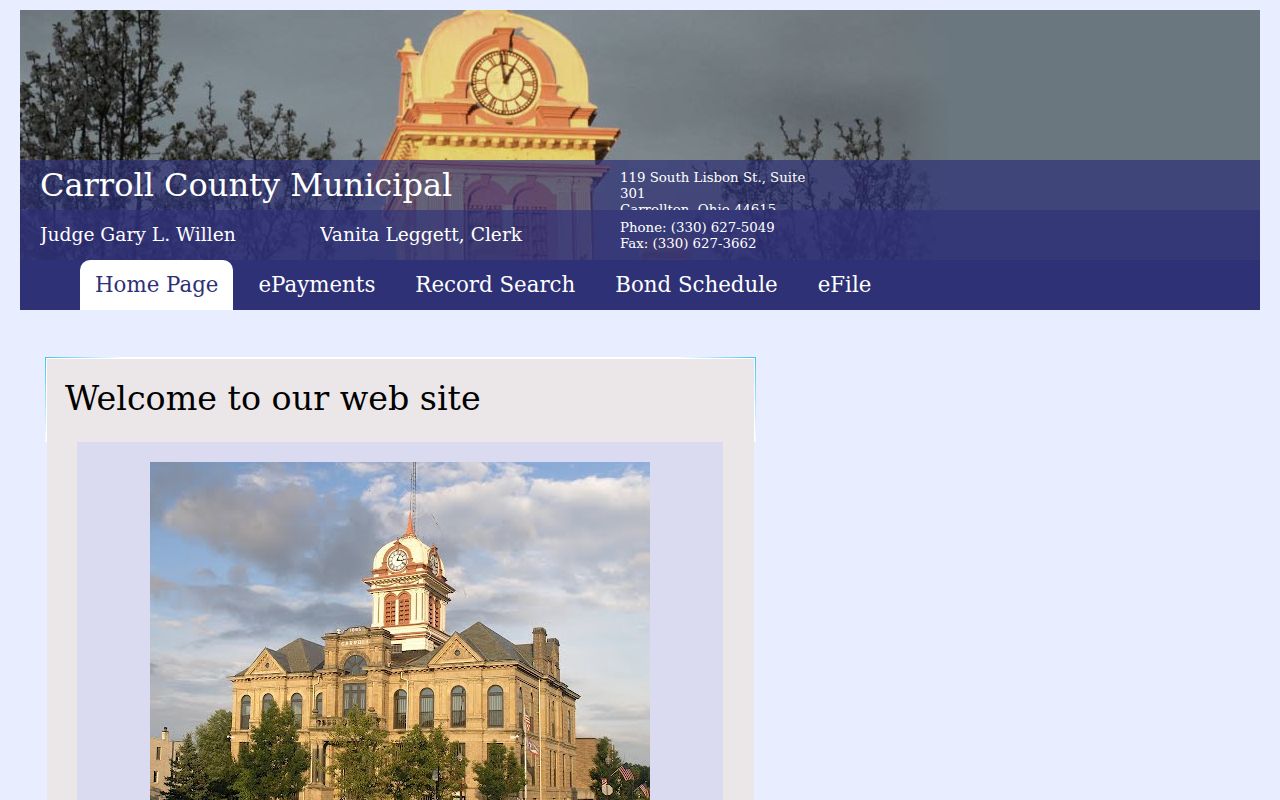
The official court page is a sound starting point for the Municipal record channel. It still is not a stand-in for the Case Search result itself.
Inside a Carroll County Criminal Docket
A docket, called a register of actions in Common Pleas practice, is a dated index. It runs from case identification and parties through filings, notices, settings, entries, and a disposition. It is not every filed document. An entry can tell you an order or motion exists. The paper itself must come from the clerk. It may be redacted or unavailable remotely.
| Case number | The court-assigned identifier. Municipal input is limited to numbers and dashes; no countywide format should be inferred. |
|---|---|
| Case type | Municipal records visibly use CR and TR; Common Pleas has its own file organization. |
| Accepted filing | A clerk-accepted electronic filing differs from a submission awaiting review. |
| Setting or notice | A dated event may identify an arraignment, pretrial, hearing, or other action. |
| Disposition | The recorded result for a case or count; read the entry or available order for scope. |
Read terms like "vacated," "continued," and "rejected" in sequence with their later entries. A later notice can replace an earlier setting. A missing image never proves the filing never happened.
Carroll Criminal Portal Delay Checks
The Municipal Court's 24-hour warning matters when a hearing is near. Record Search says data can be delayed at least 24 hours or longer. Calendar Search runs on the same CAPTCHA-protected system. Treat the portal result as a clue. For a time-sensitive criminal date, call the Municipal Clerk or visit the counter. The official search does not promise a complete, live display for every case.
Common Pleas matters take a different route. The Common Pleas eServices entry is browser and session controlled. When it will not show a usable register, the Clerk's published Public Access Terminal during regular business hours is the direct-access fallback. Ask for the docket by court and case number. Do not guess from a missing online image.
How a Criminal Case Moves
A criminal docket records stages, not a prediction. A Municipal matter may show a charge-related filing, arraignment, pretrial, later hearing, and disposition. A felony can begin with Municipal preliminary activity. It can then move to a separately numbered Common Pleas file. In Common Pleas, notices and orders enter the register. An electronic submission counts as filed only after the Clerk accepts it.
Docket flow: Filing or charge › arraignment › pretrial or preliminary stage › plea or trial › disposition › sentencing entry where applicable.
Read a continuance or vacated setting in chronological order. The later filed notice or entry is stronger date evidence than the first event a name search returns.
Carroll Criminal Docket Totals
How busy were these courts in 2024? The official 2024 Municipal Form AJ reports 312 new misdemeanors, 69 felony preliminary matters, 58 OVI cases, and 375 other-traffic cases. The Common Pleas General Division's 2024 Form A adds 77 new criminal filings.
Those court-reported counts measure separate workloads. Aggregate context only. They are not names, outcomes, or a searchable roster.
Courts That Hold Criminal Dockets
Carroll County Municipal Court keeps the Municipal criminal docket and the preliminary felony record. The Carroll County Clerk of Courts keeps Court of Common Pleas General Division criminal files. Those include felony trial matters. Probate and Juvenile Court is a separate Common Pleas division. It has its own record path. Sharing one county complex does not make it an adult criminal docket.
Ohio offers no statewide public trial-court portal for an individual Carroll case. Supreme Court eStats reports court statistics, not case dockets. Pick the court first. Then use its local portal or clerk.
Carroll Criminal eServices Fallback
The Common Pleas e-filing portal is county-run, and using it is optional. It covers filing, not the full record room. Local rules route filings through the Clerk of Courts. A submission sent after 4 p.m. is reviewed the next business day. Some registers simply are not open from home.
When a docket is not available remotely, use the Public Access Terminal. You can also ask the Clerk's office for help. The terminal sits in Suite 401. That is on the fourth floor of the Carroll County courthouse complex at 119 South Lisbon Street in Carrollton. The Clerk posts weekday hours of 8 a.m. to 4 p.m. The phone number is 330-627-4886. Local rules keep both open and closed case files in the Clerk's office. That holds unless an order says otherwise.
Enter through the 2nd Street entrance and pass security screening. Bring the court name and the exact case number if you have it. Then say what you need: inspection, a docket, a plain copy, or a certified copy. A narrow request works best. Asking staff to run a broad criminal name search does not. Staff can then identify the restriction and the fee for the item.
Ohio access rules protect in-person access even where remote delivery is thin. A good request names the court, the case number if known, and the item wanted. That one sentence gives the Clerk what is needed. From there the applicable restriction and fee come clear.
Sealed Dockets and Public Access
Rules 44 and 45 of the Ohio Rules of Superintendence treat dockets, indices, and journals as court records open to the public unless a rule says otherwise. Public access is the presumption. Remote access is allowed, not required. Carroll Common Pleas keeps some items off the web, including personal identifiers, financial affidavits, and anything a judge ordered out of public view. So an absent online image proves nothing. The real question is whether a public version can be inspected at the court, not whether the case exists.
Adult and juvenile records differ. R.C. 2953.32 provides an adult sealing or expungement process that a court decides. R.C. 2151.356 has distinct juvenile sealing rules and no filing fee for an eligible juvenile application.
A juvenile file is not an adult criminal record. It runs under a different door. Access is governed by the Probate/Juvenile Court, by statute, and by any court order, so leave a restricted result to that court to evaluate.
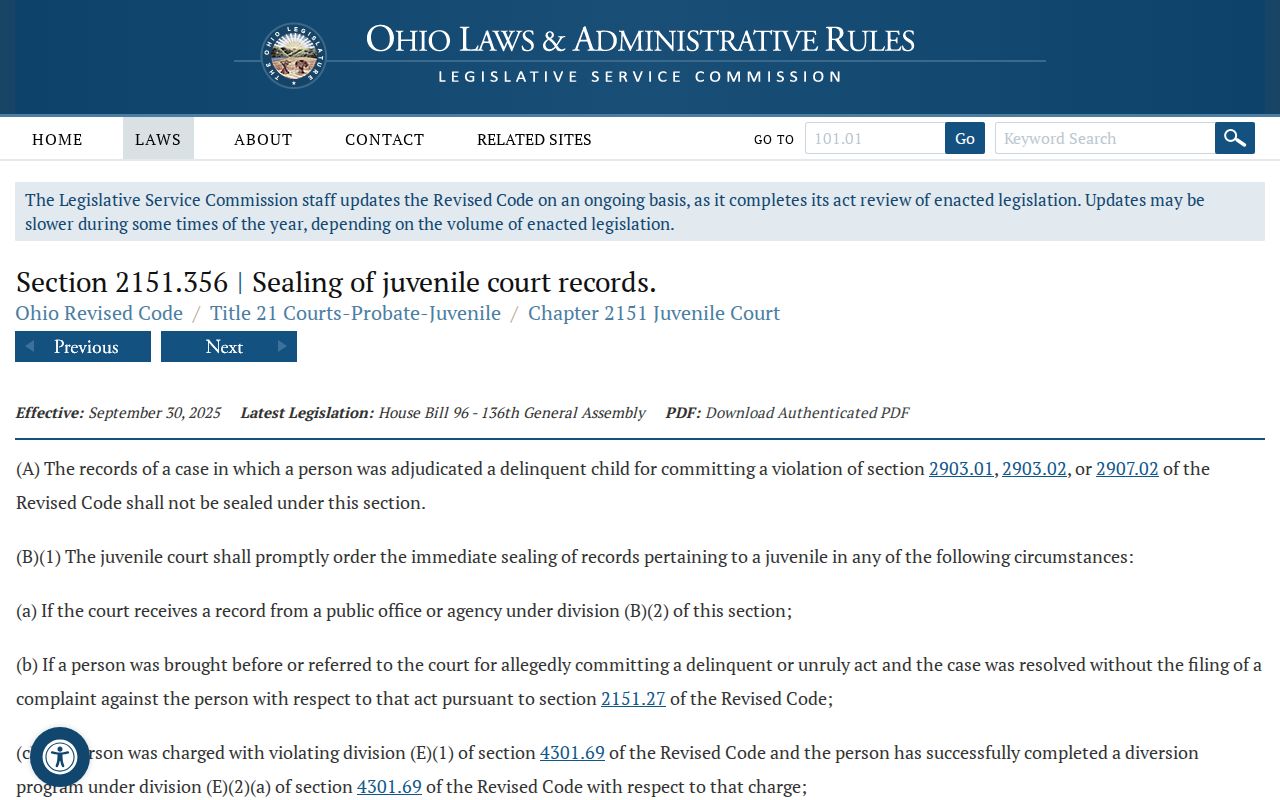
The juvenile statute tells the story. It sets a legal route for juvenile records that differs from an adult criminal docket search in Municipal or Common Pleas court.
Carroll Criminal Sealing Process
Sealing is a court process. It is not a Record Search setting. An adult request is decided under the governing statute in the court that holds the case. The Clerk's links to a sealing application say nothing about eligibility. Nor can a portal result make that call. For a limited record, the court holding the file decides inspection, redaction, and any permitted copy.
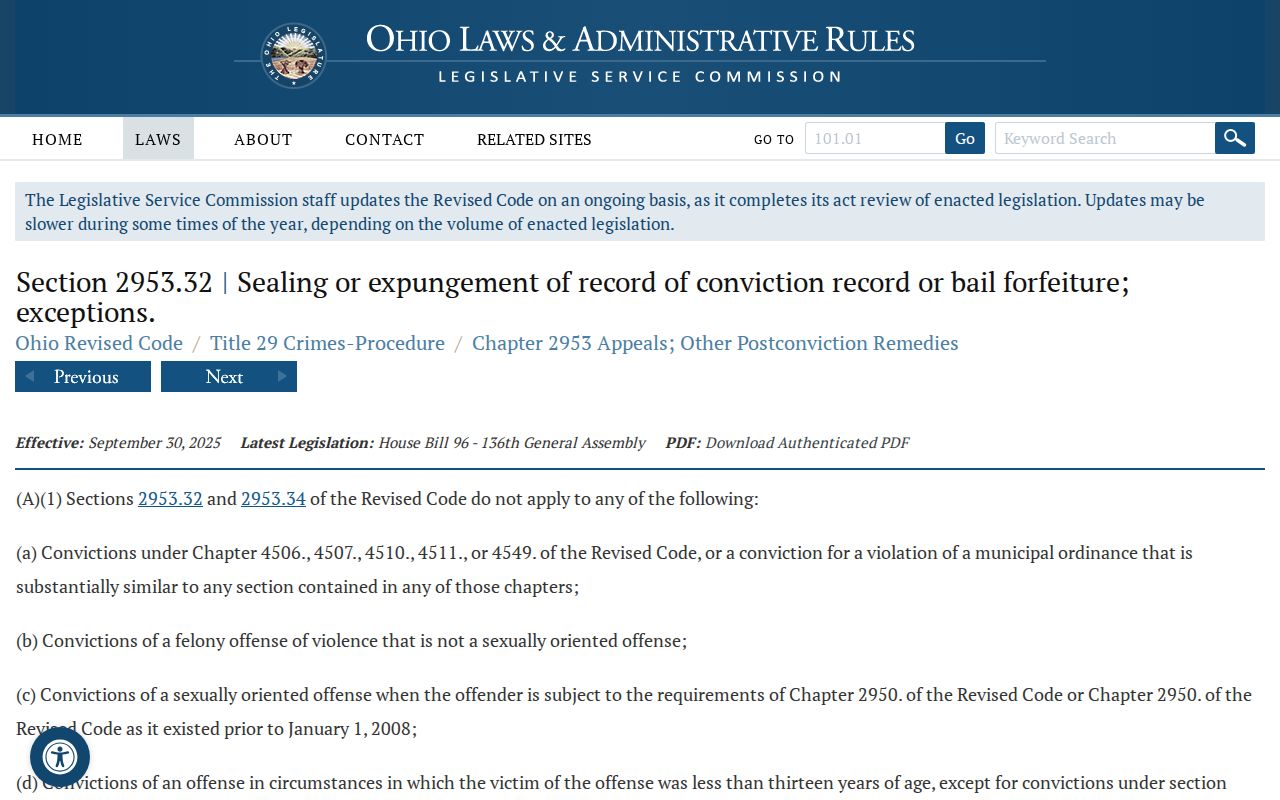
This adult statute separates sealing from ordinary docket channels.