
Searching Carroll County Civil Dockets
Carroll County Municipal Court Record Search is the local online route for Civil CV and Small Claims SM cases. The gateway warns that its data can lag by at least 24 hours or longer. Common Pleas General Division civil files and Domestic Relations files sit with the Carroll County Clerk of Courts instead. Ohio runs no single statewide portal that finds every Carroll civil case.
At Municipal Case Search, search by the published name form, a date, a permitted case number, or one other available criterion. The court tells users not to combine clues, and the regular CAPTCHA applies. A name result may still need a case number or clerk confirmation before you can trust it as the right matter. For a Common Pleas docket, try the court's eServices route first. If remote access falls short, use the Clerk's terminal or counter.
- Select Municipal CV or SM, or identify a Common Pleas General or Domestic Relations matter.
- Use one authorized Municipal search item at a time.
- Complete the court’s CAPTCHA through the standard screen.
- Read the latest dated register entry and any hearing notice.
- Request the needed plain or certified record from the court holding the case.
Carroll Civil CV and SM Labels
The visible Municipal filters help, but they stay narrow. CV marks the Civil category, and SM marks Small Claims. The same form also includes TR, CR, and PR. Leaving unrelated categories on can blur a broad search. The court's 25, 50, 100, and 250 match controls help manage what remains.
A category label tells you little beyond the bucket. It does not describe every issue in the case. It also cannot prove that a document image is public, or reveal whether an appeal has opened another docket. Municipal Case Search takes case numbers with numbers and dashes only, capped at eight characters. That input limit is not a civil case-number formula for all of Carroll County.
Inside a Carroll County Civil Docket
A civil docket, or register of actions, is the chronological index of a case. It may list the caption, the filing date, pleadings, motions, notices, hearings, entries, and judgment. An entry confirms that an event occurred in the file. It is not automatically the full motion, order, exhibit, or a clerk-certified document. Read the sequence in order. A later entry can change a prior hearing or resolve an open issue.
| Case number | The court-assigned identifier used with the relevant clerk or portal. |
|---|---|
| Caption | The case title, which is not a complete substitute for the documents in the file. |
| Filing and service | Dated entries can identify filings or notice activity, subject to the available public record. |
| Motions and entries | Requests and court actions that may require the underlying filed document for full terms. |
| Judgment or disposition | A recorded outcome; seek the filed judgment or certified copy when the actual document is required. |
Common Pleas uses "docket," "docket entry," and "register of actions" in its local rules. The filing date that counts is the clerk's acceptance date, not the time an electronic sender hit submit.
Carroll Municipal Jurisdiction Lines
State law draws two useful lines for where a civil matter may begin. R.C. 1901.17 generally gives Municipal Court civil jurisdiction through $15,000. R.C. 1925.02 sets the small-claims ceiling at $6,000, excluding interest and costs. These are jurisdictional lines only. They do not tell you what a given case will cost or recover.
Common Pleas General Division controls civil files outside the lower court's exclusive sphere. It also takes matters routed there by law or by filing choice. Domestic Relations work also runs through the Clerk structure. But it is not a Municipal CV category. Choose the court before you open any portal.
Civil Case Types on the Docket
Carroll's separate courts carry distinct civil work. Municipal records can include civil and small-claims matters. The Common Pleas Civil Case Designation form lists classifications such as professional tort, product liability, other tort, workers' compensation, foreclosure, administrative appeal, complex litigation, and other civil matters. A designation helps the clerk organize a filing. It does not replace the docket or a filed pleading.
- Municipal Civil [CV] cases within the applicable court jurisdiction.
- Municipal Small Claims [SM] cases subject to the statutory ceiling.
- Common Pleas general civil actions, including designated tort and property-related categories.
- Common Pleas administrative and workers’ compensation appeals.
- Domestic Relations files under the Common Pleas Clerk structure, subject to access limits.
The 2024 Municipal Form AJ reports 447 new contract cases and 13 new small-claims cases. Those are aggregate court figures, not a search index or the result for any single claim.
Carroll Civil Filing Categories
The Common Pleas Civil Case Designation form shows why a short portal entry has limits. It gathers party and related-case details. The categories include foreclosure, workers' compensation appeal, complex litigation request, and other civil work. The Clerk manages the fuller case file, including material a remote docket may never display. A case caption alone cannot establish the whole procedural history.
For Common Pleas filing activity, Henschen eFile is the e-filing destination. It is the one linked by Carroll court materials.
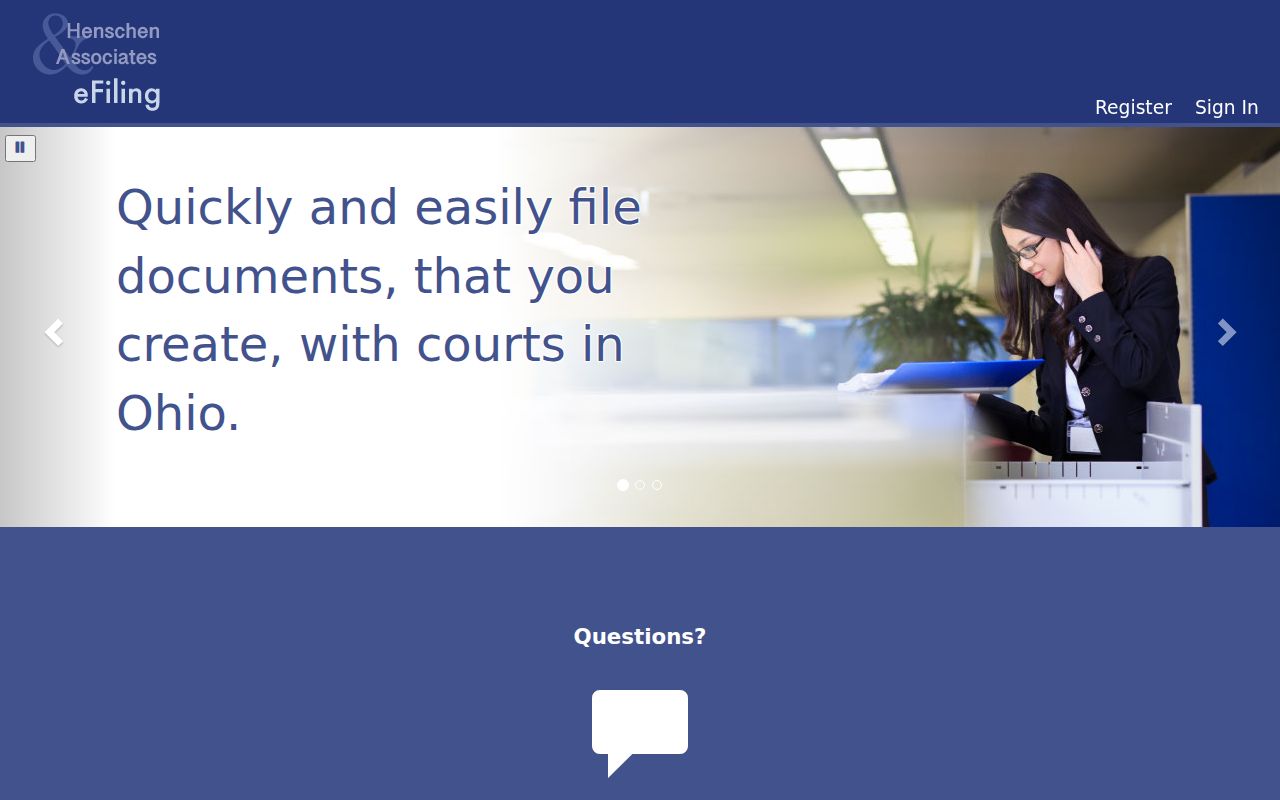
The e-filing screen supports a filing workflow, nothing more. It does not open public access to every Common Pleas docket image, and a submission is not filed until the Clerk accepts it.
Civil Docket Settings and Hearings
Need a Municipal civil hearing date? Start with Calendar Search, right after the Record Search disclaimer. You must enter a beginning date; the ending date is optional. Case-type filters, result-count controls, and a CAPTCHA round out the form. A calendar result is a clue, not a guarantee. It may not show every judge, courtroom, setting label, or full case style, so confirm the civil docket entry or call the Municipal Clerk before you count on it.
Common Pleas works differently. The court or court administrator sets trial dates, and filed notices move through the court process. There is no separate Common Pleas web calendar. Watch for later entries, too. A continuance, reset, or vacated entry always controls over an earlier date. For the full route, see Carroll County Court Dates.
Carroll Civil Deposits and Fees
The Common Pleas local rules publish civil deposits and fees. Treat them as deposits or listed fees, not a forecast of your final cost. The current rules set a $350 general civil deposit. There is a $500 deposit for foreclosure, quiet title, or partition cases, a $250 jury-demand amount, and several item-specific figures. Before you rely on any number, ask the Clerk. Request the current rule and the payment procedure.
| Common Pleas item | Published amount | How to read it |
|---|---|---|
| General civil action | $350 | Listed filing deposit, not a final-cost promise. |
| Foreclosure, quiet title, or partition | $500 | Listed deposit under the local rules. |
| Jury demand | $250 | Separate listed amount where applicable. |
| Re-open or amend final entry | $100 | Published fee line; confirm with the Clerk. |
Municipal and Probate/Juvenile keep their own fee schedules. A rate from one clerk never transfers to another court.
Civil Docket Access Rules
Ohio Rules of Superintendence 44 and 45 control access to court records. Dockets, indices, and journals are all court records. Direct access must be provided within a reasonable time. Remote access is not required. Carroll Common Pleas rules also restrict certain personal identifiers, nonpublic sheets, financial affidavits, and documents a judge has ordered kept from public view. So a missing remote image can sit right alongside a direct-access request that works.
Use the proper custodian. Sup.R. 44–45 supplies the court-record access framework. Ohio’s Public Records Act supplies the general public-office inspection and copy baseline, but it does not bypass court restrictions.
Keep any request narrow. Give the court name, the case number, the document or date if you know it, and say whether you want inspection, a docket, an ordinary copy, or a certified copy. The Commissioners' administrative records form is the wrong route for an ordinary court case file.
Carroll Civil Copies Differ
Three items get confused constantly: the docket, the register, and the certified copy. The register lists events in date order. A filed document is the real order, pleading, or affidavit. It can also be a notice or exhibit. It stays subject to redaction or restriction. Only the proper clerk makes and certifies a certified copy, so a portal printout is neither one automatically.
For a Common Pleas file, the Clerk's Public Access Terminal is the published direct-access option during regular business hours. Ordinary copies run $0.25 per page under the local rules. Municipal civil files follow their own rule. The portal itself directs anyone needing verification to make a request. Or visit during business hours. Municipal rules list $0.25 per page for ordinary copies and $2 for certified copies. Those rates stop at Municipal. They do not apply to Common Pleas or Probate/Juvenile records. For the state framework, Ohio's official Public Records Act page spells it out.
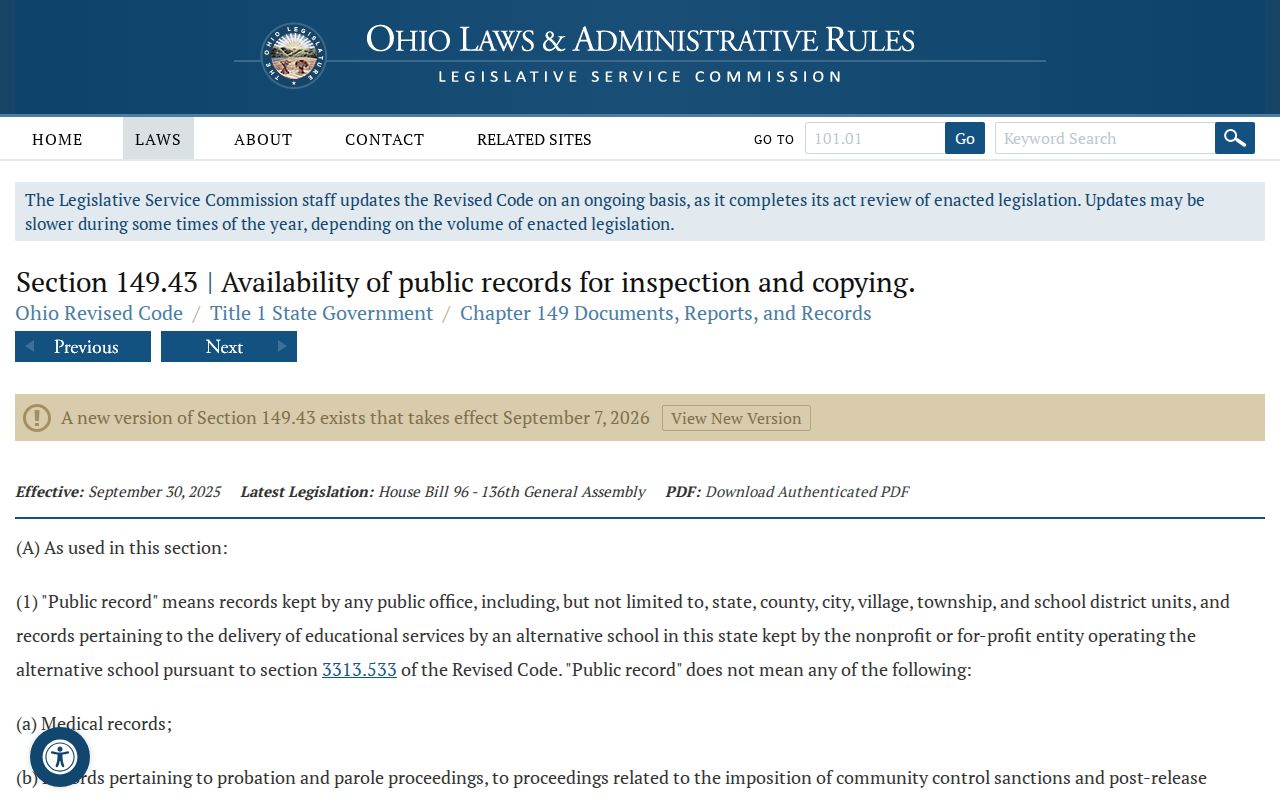
That statute gives useful access context. Still, the court holding the civil file decides availability, redaction, certification, and the right copy route.